Stories
Mustard Oil vs Refined Oil in Pickles: Why Every Traditional Recipe Insists on Sarson
Unpacking the Age-Old Secret Behind Bihar's Finest Achar

Ever wondered why dadi's achar always tastes best? The secret often lies in the oil. Dive into the age-old debate of mustard oil vs refined oil in pickles and uncover why sarson ka tel remains the undisputed champion for taste, tradition, and longevity.
Remember the distinct aroma that would waft from Dadi's kitchen during summers? That sharp, pungent fragrance wasn't just the mangoes or the spices; it was the unmistakable scent of sarson ka tel, or mustard oil, gently warming, ready to embrace a fresh batch of homemade achar. For generations, in every Indian household, particularly across the fertile plains of Bihar's Magadh region, the choice of oil for pickling was never a debate. It was always mustard oil. But in our modern kitchens, with a dizzying array of oils available, the question sometimes arises: is there really a difference? Can’t I just use any refined oil? Today, we’re diving deep into the heart of this culinary tradition, exploring the crucial differences in mustard oil vs refined oil in pickles, and why tradition, in this case, truly knows best.
For pickles, mustard oil is overwhelmingly preferred over refined oils due to its superior preservative qualities, distinctive pungent flavour that enhances the achar, and its natural antioxidants. Refined oils lack these crucial attributes, offering less protection against spoilage and a bland taste profile.
The Aromatic Heart of Indian Achar: Why Oil Matters So Much
In the vibrant tapestry of Indian cuisine, achar is more than just a condiment; it's a legacy, a labour of love, and a testament to clever food preservation techniques passed down through ages. And at the very core of this art lies the oil. It acts as a protective blanket, a flavour carrier, and a natural preservative. The choice between mustard oil vs refined oil pickle isn't merely about personal preference; it's about the very essence and longevity of your achar. While refined oils promise neutrality and a high smoke point for everyday cooking, they often fall short when it comes to the unique demands of pickling. This is where the magic of sarson ka tel truly shines.
Sarson Ka Tel: The Unsung Hero of Preservation and Flavour
Mustard oil, especially the traditionally extracted kachi ghani variety, is a powerhouse of properties that make it the best oil for pickle. Its unique composition and robust flavour profile are what elevate a simple mix of fruit and spices into an exquisite, long-lasting delicacy.
Beyond Taste: Mustard Oil's Preservative Power
One of the primary reasons for mustard oil's dominance in pickling is its exceptional preservative quality. Unlike refined oils, mustard oil contains a natural compound called allyl isothiocyanate, which gives it its characteristic pungency. More importantly, this compound, along with other antioxidants present in the oil, possesses strong antimicrobial and antifungal properties. These natural agents act as a barrier against spoilage, preventing the growth of bacteria and mould that can ruin a batch of achar. This inherent preservative quality significantly extends the shelf life of pickles, allowing them to mature beautifully over months, even years, without refrigeration.
The Flavour Signature: Pungency and Depth
Imagine a Bihari mango pickle without that characteristic tangy, spicy kick, underscored by a subtle warmth. Much of that depth comes from mustard oil. Its distinctive pungent flavour doesn't just sit on the palate; it integrates with the spices and the main ingredient, creating a complex, well-rounded taste that's the hallmark of authentic Indian pickles. Refined oils, by design, are stripped of their natural flavours to be neutral, which might be good for certain dishes but completely misses the point for achar. The bold flavour of sarson ka tel is not just a flavour; it's a character that defines the pickle.
Understanding Smoke Point: A Culinary Edge
While often associated with frying, a high smoke point is also beneficial for pickles, albeit in a different context. Traditionally, mustard oil is heated until it just begins to smoke, then cooled completely before being added to pickles. This process serves a dual purpose: it reduces the raw pungency, mellowing the flavour slightly, and helps to eliminate any trace moisture or unwanted compounds, further enhancing its preservative qualities. Mustard oil boasts a relatively high smoke point, typically around 250°C (480°F), which makes this pre-treatment safe and effective.
Refined Oils: A Mismatch for the Mighty Achar
While refined oils like sunflower, groundnut, or soybean oil are staples in many modern kitchens for their neutral taste and versatility, they are generally not suitable for traditional Indian pickles, especially those meant for long-term storage.
The Neutrality Problem
The very quality that makes refined oils popular – their neutral flavour – is their undoing in the world of pickles. Achar thrives on bold, assertive flavours, and a neutral oil simply cannot provide the necessary depth and character. The spices and main ingredients might taste good initially, but without the complementary notes of mustard oil, the pickle often tastes flat, incomplete, and lacks that authentic punch.
Lacking the Protective Shield
Perhaps the most critical drawback is their inability to offer the same level of preservation. Refined oils undergo extensive processing, which removes many of the natural compounds, including antioxidants and antimicrobials. This leaves them with a weaker defence against spoilage. Pickles made with refined oil are far more susceptible to mould and bacterial growth, demanding refrigeration and a much shorter shelf life. This makes them impractical for the traditional method of making large batches of achar to last through the year.
Health & Heritage: The Traditional Wisdom of Mustard Oil
Beyond flavour and preservation, the choice of mustard oil also carries significant health and cultural weight. Historically, mustard oil has been revered in Ayurvedic practices for its warming properties and therapeutic benefits. Modern science, too, has highlighted its nutritional profile. Mustard oil is rich in monounsaturated and polyunsaturated fatty acids, including Omega-3 and Omega-6, which are essential for heart health. It also contains powerful antioxidants that combat free radicals in the body. While debates continue on specific health claims, the traditional use of kachi ghani mustard oil for its holistic benefits is deeply ingrained in Indian heritage. For more on the nutritional aspects of various cooking oils, you can refer to authoritative sources like the Olive oil is generally not recommended for traditional Indian pickles. Its distinctive fruity flavour clashes with the pungent, spicy profile of Indian achar, and it lacks the strong antimicrobial properties of mustard oil needed for long-term preservation. It's also typically more expensive, making it impractical for large batches. Pickles made with mustard oil, stored correctly in a cool, dark place, can last for 1-2 years or even longer, thanks to its natural preservative qualities. Pickles made with refined oil, however, have a significantly shorter shelf life, often only a few weeks to a couple of months, and typically require refrigeration to prevent spoilage. While some pickles use raw mustard oil, traditional practice often involves heating the mustard oil to its smoke point (until a wisp of smoke appears), then cooling it completely before adding to the pickle. This process mellows its sharp pungency and helps to remove any residual moisture, further enhancing preservation and flavour development. For certain pickles, like those from Bihar, heating is common. Kachi ghani refers to mustard oil extracted using a cold-press method, meaning the seeds are crushed at low temperatures. This preserves the oil's natural aroma, flavour, and nutritional integrity. It's highly recommended for pickles because it retains the maximum amount of pungent compounds and antioxidants, which are crucial for both taste and long-term preservation. Yes, mustard oil significantly helps prevent mold in pickles. Its natural compounds, particularly allyl isothiocyanate, possess strong antifungal and antimicrobial properties. When the pickle is submerged in a layer of mustard oil, it creates an anaerobic environment, cutting off oxygen supply and inhibiting the growth of mold and other spoilage-causing microorganisms. Bihari specialities Explore our full Bihar achar online collection — aam, lal mirch, oal, kathal & more. From our kitchen Handcrafted in small batches with cold-pressed mustard oil. Free shipping above ₹499. Pickles Crunchy lemon pickle with a unique nimki-style texture Pickles Classic raw mango pickle — the king of achars Pickles Whole green chillies pickled in mustard oil with aromatic spicesQuick questions
Shop the pickles in this story
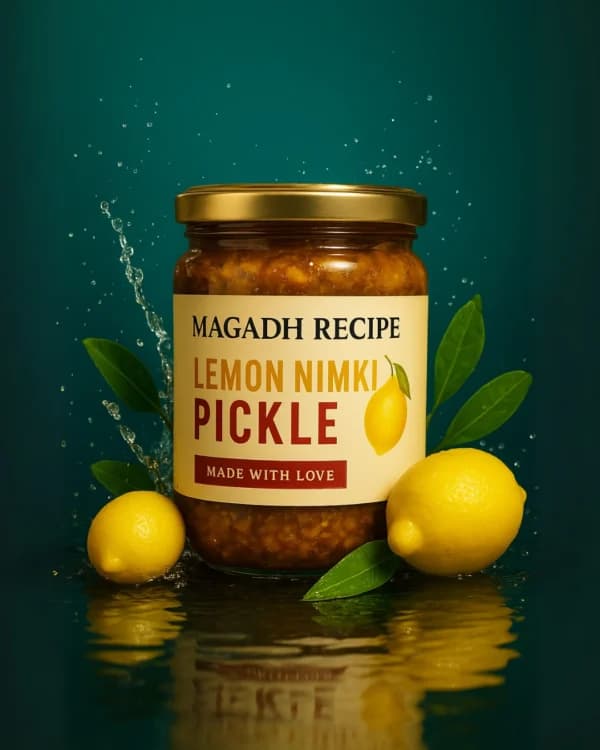
Lemon Nimki Pickle | नींबू निमकी अचार
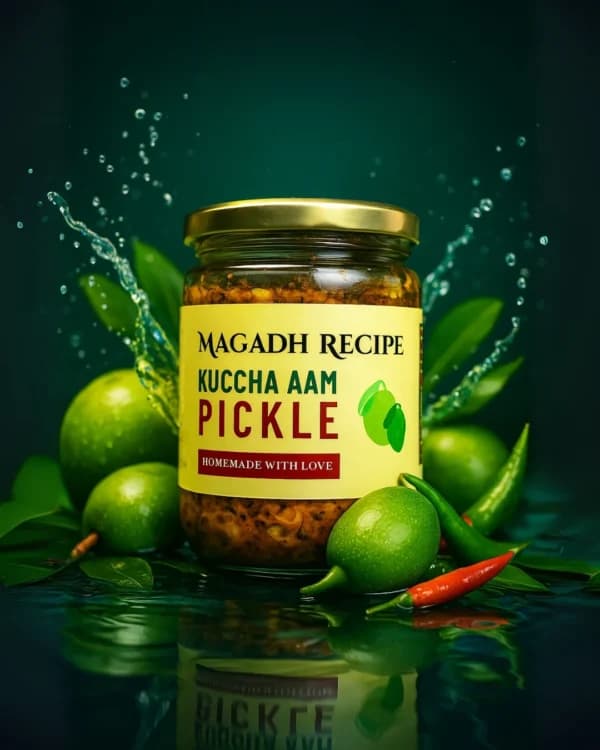
Aam Kuccha Pickle | आम कुच्चा का अचार
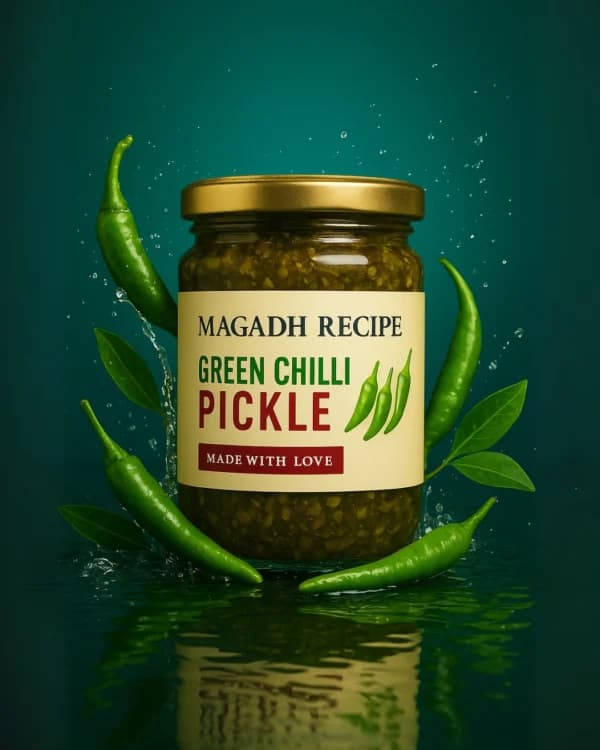
Green Chilli Pickle | हरी मिर्च का अचार
Keep reading


