
Stories
How to Pick the Right Mango for Pickle: The Best Mango for Pickle Varieties Every Indian Home Should Know
From Ramkela to Totapuri: A Deep Dive into Raw Mango Varieties for Perfect Achar

The secret to an unforgettable achar lies not just in the spices, but in the mango itself. Learn how to choose the best mango for pickle from traditional Indian varieties and ensure your homemade batches are legendary.
Ah, the unmistakable scent of summer in an Indian home! It’s not just the sweet perfume of ripe mangoes, but the sharp, tangy aroma of raw mangoes being prepped for the annual ritual of achar making. This is a sound, a smell, a memory etched deep within our collective consciousness – the rhythmic thud of a sharp knife slicing through firm kairi, the sun-drenched courtyard where pieces lay drying, and Dadi’s knowing smile as she mixed spices with her hands. Every year, as the mango season peaks, the most crucial decision arises: how to pick the right mango for pickle? It’s a question that can make or break a batch of precious achar, turning it from merely good to truly legendary. At Magadh Recipe, we believe the soul of an achar lies profoundly in its primary ingredient – the mango. Let's embark on a flavourful journey to understand the unsung heroes of our pickle barnis.
The best mango for pickle making is typically a raw, firm, and intensely sour variety with low fibre content. While Ramkela is often hailed as the king for its ideal texture and tartness, varieties like Totapuri, Rajapuri, and raw Langra also offer excellent characteristics, each lending a unique flavour and texture profile to the final achar.
The Soul of Achar: Why Mango Matters So Much
Mango pickle isn't just a condiment; it's a culinary legacy, a burst of sunshine and spice that elevates every meal. But what makes a mango suitable for this transformation? It's a delicate balance of acidity, texture, and the ability to absorb spices without turning mushy. The right raw mango varieties provide the necessary tang that acts as a natural preservative, along with a firm flesh that holds its shape through the curing process. Picking the correct type ensures your pickle stays crisp, flavourful, and lasts for months, even years, echoing the wisdom passed down through generations.
Choosing the best mango for pickle is paramount for achieving the perfect balance of flavour and texture in traditional Indian achar. Raw mangoes, or kairi, are selected for their high acidity and firm flesh, which are crucial for the preservation process and for preventing the pickle from becoming soggy. The sourness cuts through rich dishes, while the texture provides a delightful crunch, making the mango the undisputed star of the show.
Unearthing Bihar's Gold: The Best Mango for Pickle Making
Our Magadh region, nestled in the heart of Bihar, boasts a rich agricultural heritage, and its mango orchards are no exception. While the choice of mango can be regional, certain varieties have earned a pan-Indian reputation as the best mango for pickle. Let’s explore five such gems that every Indian household, and every pickle enthusiast, should know.
Ramkela: The King of Pickle Mangoes
If there's one name that resonates loudest when discussing pickle mangoes, it's Ramkela. Hailing from Uttar Pradesh but cherished across India, Ramkela is truly a champion among raw mango varieties. It’s characterised by its elongated shape, vivid green skin, and a distinct, almost aggressive sourness that is perfect for achar. What sets Ramkela apart is its incredibly firm, fibrous flesh that remains wonderfully crunchy even after weeks of marination in oil and spices. This makes it ideal for traditional large-piece mango pickles, ensuring a delightful bite with every morsel. The intense tartness of Ramkela also means it requires a good amount of seasoning and oil, which only adds to the robust flavour profile of the final Ramkela mango pickle.
Totapuri: The Trusty All-Rounder
Totapuri mangoes, easily identifiable by their parrot-beak shape, are another excellent choice for pickle mango selection. While not as intensely sour as Ramkela, Totapuri offers a pleasant tang combined with a significant amount of firm, slightly less fibrous flesh. Its milder acidity makes it versatile, working well in both traditional oil-based pickles and even some lighter, quick-serve achar recipes. The consistent texture of Totapuri ensures that the pickle pieces retain their form and don't disintegrate. It’s a favourite in Southern India for various culinary uses, including chutneys and salsas, but its firm structure makes it a reliable contender for pickle making too.
Rajapuri: The Tangy Delight
Often overlooked by some, Rajapuri is a hidden gem for pickle aficionados. These mangoes are typically smaller, rounder, and possess an exceptionally sharp, sour taste. While they might not yield as much pulp as a Ramkela, their intense tang is highly prized, especially for grated mango pickles (chunda or gorkeri) or for finely chopped achar where every tiny piece delivers a powerful flavour punch. The strong acidity of Rajapuri also lends itself beautifully to pickles that are meant to age and ferment, developing deeper, more complex notes over time. If you’re looking for a potent sour kick, Rajapuri could be the best mango for pickle in your kitchen.
Langra (Raw): The Unsung Hero
While the ripe Langra mango is celebrated for its incomparable sweetness and aroma, its raw counterpart, or 'kairi Langra', offers a different kind of magic for pickles. Raw Langra is intensely sour and somewhat fibrous, making it a traditional choice for pickle making in many regions, especially in parts of Bihar and Uttar Pradesh. The fibres, which can be off-putting in some raw mangoes, actually help Langra pieces hold their shape in the pickle, contributing to a satisfying chew. Its unique flavour profile, even in its raw state, adds a depth that is distinct from other varieties. For those who appreciate a rustic, robust homemade achar, raw Langra offers an authentic, time-honoured option.
Desi Kairi/Local Varieties: The Heart of Home Pickles
Beyond these popular names, there’s a whole universe of local, regional 'desi kairi' varieties that are considered the best mango for pickle in their respective localities. These could be small, fiercely sour mangoes from a neighbour’s backyard tree, or varieties known only by local names in village markets. These often possess an incredible sourness and robust texture that are perfectly suited for the specific regional achar recipes. Embracing these local Indian mango types not only supports local farmers but also connects you to a deeper, more authentic tradition of pickle making, full of stories and unique flavours.
Beyond the Variety: What to Look for in Any Raw Mango
Even when you've chosen your preferred mango variety, a discerning eye is crucial. Here’s a quick guide to ensure you pick the absolute best raw mangoes for your pickle:
- Firmness is Key: A good pickle mango should be hard to the touch, with no soft spots or give. This indicates its raw, unripe state and ensures it will hold its shape throughout the pickling process.
- Unblemished Skin: Look for mangoes with smooth, unblemished green skin. Avoid any that have cuts, bruises, or black spots, as these can introduce bacteria and spoil your pickle.
- Weight for Size: A heavy mango for its size usually means it has more pulp and less air, indicating a good quality fruit.
- No Ripening Signs: Ensure there's absolutely no hint of yellowing or a fruity aroma, which are signs of ripening. We want strictly raw, sour mangoes for our achar.
- The Right Aroma (or lack thereof for raw): While ripe mangoes have a distinct fragrance, raw mangoes should have a very subtle, slightly acrid, or green aroma. Any sweet or overpowering fruity smell means it's beginning to ripen.
The Magadh Recipe Difference: Crafting Perfection from Choice Mangoes
At Magadh Recipe, our commitment to authentic, handcrafted pickles begins with this very first step: selecting the absolute best mango for pickle. We don't just source mangoes; we partner with local farmers who cultivate these traditional varieties with care and generations of knowledge. Our expert artisans, many of whom have honed their skills over decades, meticulously inspect each raw mango, ensuring it meets our stringent quality standards for firmness, sourness, and freshness. This dedication to the foundational ingredient is what gives our pickles their unparalleled taste and texture, ensuring that every jar of Magadh Recipe achar is a true testament to Bihar's rich culinary heritage.
Traditional Wisdom: Preparing Your Mangoes for the Barni
Once you’ve carefully selected your raw mangoes, the preparation is just as vital. Wash the mangoes thoroughly under running water to remove any dirt or sap. Dry them completely with a clean cloth, then air-dry them further, ideally under the sun or in a well-ventilated area for a few hours. Any residual moisture can spoil the pickle. Once dry, cut the mangoes into your desired pieces – cubes, wedges, or slivers, depending on the achar you are making. The size and shape can influence the texture and how quickly the mango absorbs the spices. Proper drying ensures the mangoes are ready to embrace the panch phoran and mustard oil that will transform them. For more insights into the health benefits of enjoying traditional pickles, you might find our upcoming post Mango Pickle Health Benefits: More Than Just a Condiment interesting.
Storing Your Golden Harvest: Ensuring Longevity
The journey of making the best mango for pickle doesn't end with mixing the spices; proper storage is key to its longevity and flavour development. Traditionally, pickles are stored in ceramic barnis or glass jars, ensuring they are absolutely clean and dry before use. The pickle should always be submerged in oil – usually mustard oil in Bihar – which acts as a protective barrier against air and moisture, preventing spoilage. Regular sunning, especially during the initial weeks, is also a time-honoured practice that helps cure the pickle, develop its flavours, and inhibit microbial growth. Always use a clean, dry spoon to serve your pickle to maintain its integrity. For more details on safe food preservation practices, you can refer to guidelines from the Food Safety and Standards Authority of India (FSSAI). To truly understand the heart of Bihari achar, exploring its unique spice blends is essential. Keep an eye out for our upcoming article, The Soul of Bihari Achar: Unravelling the Magic of Panch Phoran and Other Spices.
Choosing the best mango for pickle is an art, a science, and a tradition wrapped into one. It’s about understanding the nuances of each variety, feeling the firmness, and knowing that with the right choice, you're not just making a condiment, but preserving a piece of culinary heritage. So, the next time you find yourself in the bustling aisles of a mandi or a local market, take your time. Inspect those raw mangoes, feel their weight, and imagine the delicious achar they will become. With the right mango and a touch of Magadh Recipe's traditional wisdom, your pickle barni will truly be a treasure trove of flavour.
Quick questions
No, it is highly recommended to use only fully raw, unripe mangoes for pickle. Ripe or even slightly ripe mangoes contain more sugar and less pectin, which makes them turn mushy quickly and increases the risk of spoilage. The firm texture and high acidity of raw mangoes are crucial for a good, long-lasting pickle.
The best way is to gently scratch the skin and taste a tiny bit of the flesh – it should be intensely sour and astringent, making your mouth pucker. Visually, look for firm, bright green skin without any yellowing, which indicates ripening. Some varieties, like Ramkela, are known for their inherent sourness.
Ramkela mangoes are typically more intensely sour and fibrous, making them ideal for traditional, robust pickles where a strong tang and crunchy texture are desired. Totapuri mangoes, on the other hand, are milder in sourness, have a distinct parrot-beak shape, and offer a firm, less fibrous flesh, making them versatile for a slightly softer yet firm pickle or other culinary uses.
Yes, sun-drying is a crucial step. After washing and cutting, the mango pieces must be completely dry – not just surface dry, but with no internal moisture. Sun-drying for a few hours to a day (depending on humidity) helps remove excess moisture, which is vital for preventing mould and ensuring the pickle has a longer shelf life and better texture.
A well-made, traditional Indian mango pickle, stored correctly in a clean, airtight barni with sufficient oil to cover the mangoes, can last for 1 to 3 years, or even longer. The high salt, oil, and acidity act as natural preservatives. Always ensure a layer of oil covers the pickle and use a dry spoon to prevent spoilage.
While mango pickle is primarily a condiment, it can offer some benefits. Raw mangoes are a source of Vitamin C. Traditional pickles, especially fermented ones, can introduce beneficial bacteria to the gut, aiding digestion. However, due to high salt and oil content, it's best consumed in moderation as part of a balanced diet.
Bihari specialities
Explore our full Bihar achar online collection — aam, lal mirch, oal, kathal & more.
From our kitchen
Shop the pickles in this story
Handcrafted in small batches with cold-pressed mustard oil. Free shipping above ₹499.
Pickles
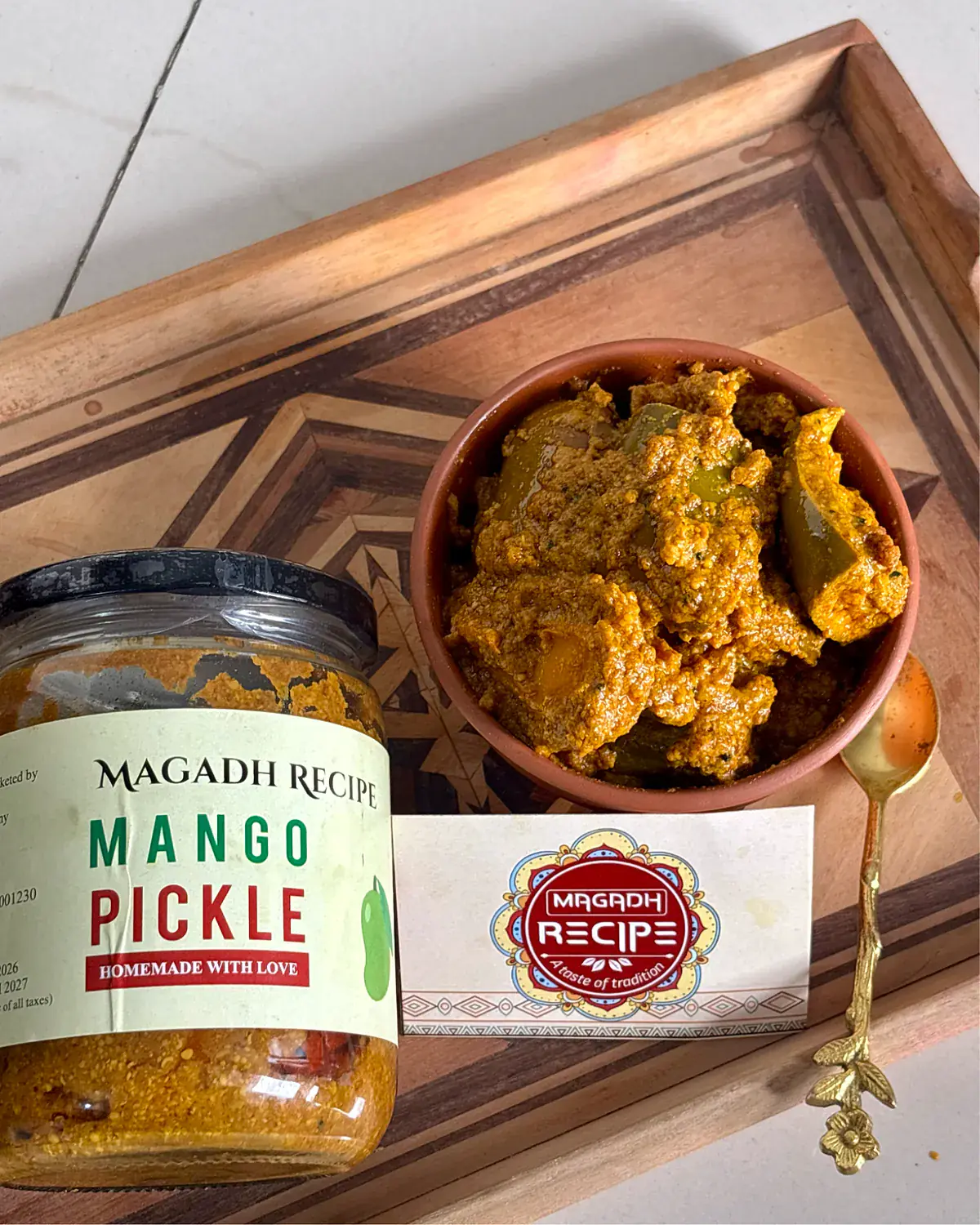
Mango Pickle
Pure Bihari Mangoes, Power of Mustard Oil
Pickles
Aam Kuccha Pickle | आम कुच्चा का अचार
Classic raw mango pickle — the king of achars
Pickles
Green Chilli Pickle | हरी मिर्च का अचार
Whole green chillies pickled in mustard oil with aromatic spices


